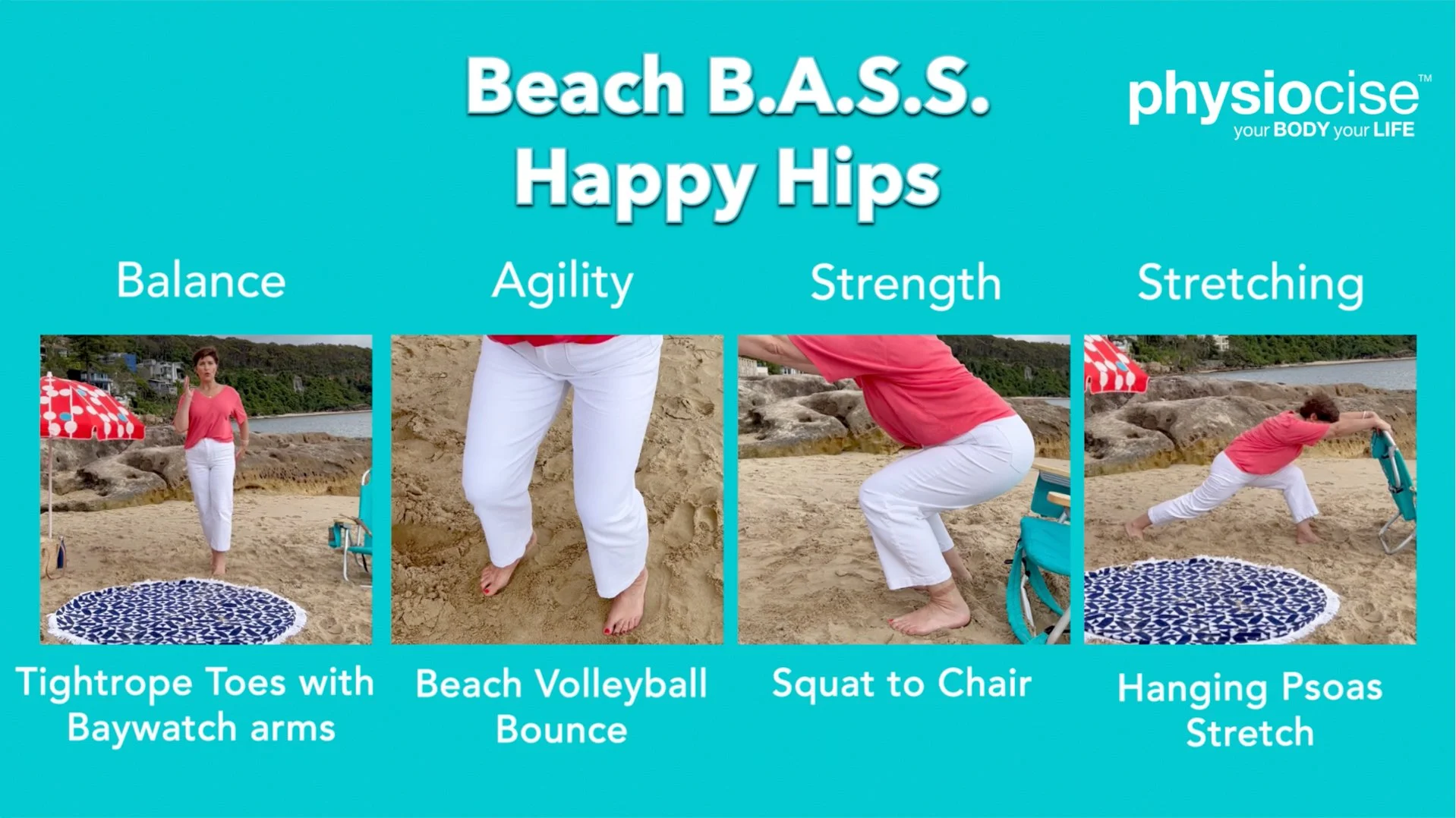
B.A.S.S. – Balance. agility. strength. stretching
BEACH B.A.S.S for Week 5 - Happy Hips
By kay fitton
Why this matters
Hip pain can occur at any age, but it becomes increasingly common as we get older. Osteoarthritis, hip impingement and labral problems may cause pain deep in the groin or front of the hip, while gluteal tendinopathy commonly causes pain on the outside of the hip, sometimes travelling down towards the knee.
Our tendons also change with age, particularly after menopause, becoming less tolerant of sudden increases in load. That enthusiastic return to walking, adding a few hills or tackling more stairs than usual can sometimes leave our hips feeling rather grumpy!
Whatever the cause, one thing we can often influence is how much load we're placing on our hips throughout the day.
It's not about avoiding movement. It's about reducing unnecessary irritation while keeping our hips active and gradually building their capacity.
Six healthy habits for happy hips
1. Stand on two feet, don't lean.
Avoid hanging on one hip when standing. Share your weight between both legs and think about stacking your body comfortably over your feet.
2. Sit a little higher.
Low chairs and car seats can make sore hips uncomfortable. Try a cushion or wedge to keep your hips slightly higher than your knees.
3. Uncross those legs.
Crossing your legs or sitting with your knees pressed together can increase compression around the outer hip. Keep your knees comfortably apart. A small reminder on your trousers might help break the habit!
4. Give your hips a comfortable night's sleep.
Try sleeping on your back with a pillow under your knees. If you're a side sleeper, try turning slightly forward with a pillow supporting your upper thigh and knee, rather than allowing the top leg to drop across your body.
5. Take shorter steps.
If walking irritates your hip, try shortening your stride rather than pushing through with long, powerful steps. Temporarily reducing hills and faster walking may also help settle symptoms.
6. Give yourself a little more room.
A slightly wider walking stance, particularly on stairs, may help you feel steadier and more comfortable. Use a handrail to share the load when needed.
What to do now
Choose just one habit that seems most relevant to your hips.
Perhaps it's standing evenly while waiting for the kettle, uncrossing your legs at the dinner table or shortening your stride on your morning walk.
Practise it over the coming week and notice whether your hips feel more comfortable.
Remember, load management isn't about resting forever. Once an irritated hip settles, gradually building strength and increasing activity helps improve its capacity to cope with everyday demands. Your physiotherapist can help you work out the right progression.
This week's reminder
Choose one habit this week.
We know changing habits takes time, especially the ones we've been practising for years! Give your chosen habit some attention this week and see how you go. We'd love to hear whether it makes a difference for you.

HOW Do you feel after CLASS?
Thank you for being a part of our Physiocise community.
If you’ve felt supported, encouraged, or stronger after your sessions, we would greatly appreciate it if you could take a moment to share a quick Google Review.


Your words can help others feel confident in taking their first step. Thank you!