B.A.S.S. – Balance. agility. strength. stretching
BEACH B.A.S.S for Week 9 - Robust Wrists
By amy kennedy
Our hands connect us to the world, but we often don't think much about our wrists until they become sore or stiff.
This week, Amy Kennedy looks at why wrist mobility and strength matter, and how your wrists can affect everyday tasks like carrying, lifting, gripping and pushing.
They can also influence how comfortably you build strength through your arms and shoulders.
Quick check
Do your wrists ever bother you when you:
Push yourself up from the floor or a chair?
Grip weights or carry shopping?
Do gardening, computer work or repetitive hand tasks?
Put weight through your hands in class, yoga or four-point kneeling?
Bend your wrists backwards, especially after an old injury?
If so, your wrists may be limiting more than just your hand movements.
Why this matters
Wrists can become sore for many reasons. Sometimes it's stiffness after a previous fracture. Sometimes it's from repetitive hand use, weight-bearing, arthritis, or simply losing mobility and strength over time.
When wrists are sore or stiff, it can become harder to put weight through your hands comfortably. That often means it's harder to build strength through your arms and shoulders as well.
That matters because strong arms help us with daily life. They help us carry, lift and hold things more easily. And, as we mentioned last week, stronger arms and shoulders can also help take some load off sore necks.
So this week isn't just about wrists for the sake of wrists. It's about keeping them capable enough to help the rest of you.
What to do this week
If weight-bearing on your wrists feels hard, the answer isn't always to avoid it completely. Often, it helps to build your tolerance gradually.
1. Start with less load
A good place to begin might be:
Practising push-ups at the wall.
Doing theraband arm work to build shoulder strength without weight-bearing.
Progressing to hands on a sturdy chair or bench.
Gradually working towards four-point kneeling on the floor, if appropriate.
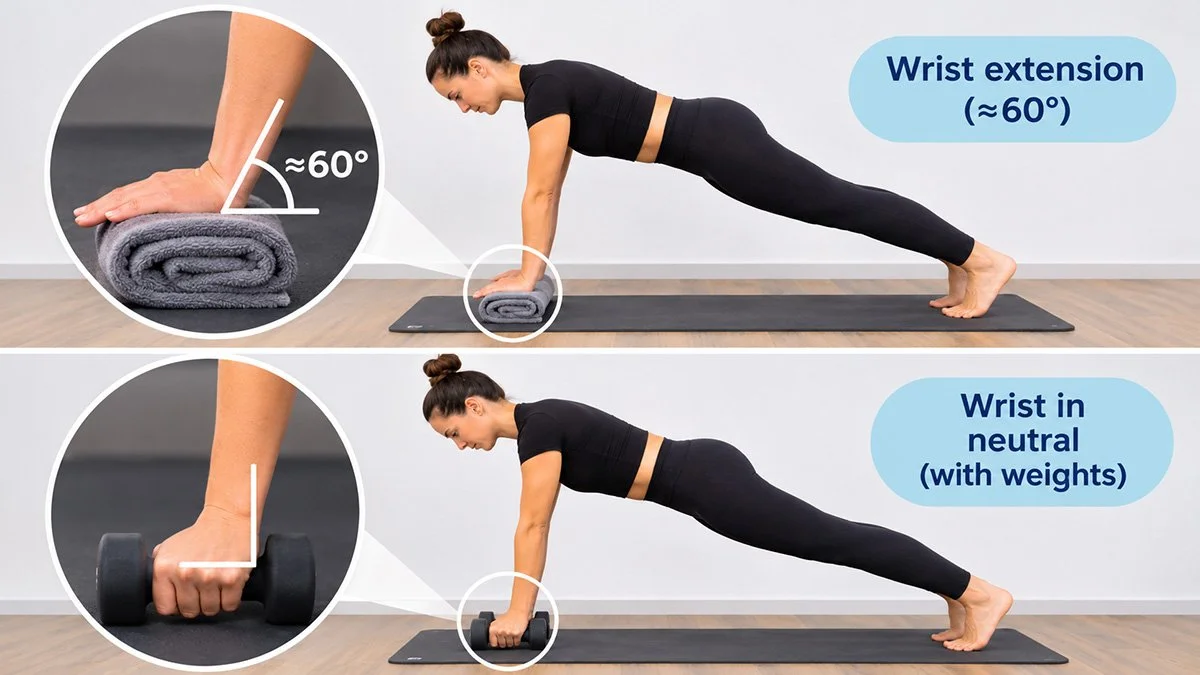
2. Change your wrist position
Sometimes a small change can make a big difference.
For example, placing a rolled towel under the heel of your hand, or using one of the wrist props we have in class, can reduce how far your wrist bends backwards and make weight-bearing more comfortable.
3. Build up steadily
Take regular breaks and gradually increase the load as your wrists become more comfortable and capable.
If you have a previous wrist injury or ongoing pain, a physiotherapist or hand therapist can help you work out whether you need specific exercises or a wrist brace.
Weekly cue
Build wrist strength gradually.


Class booking is open
We’d love to confirm your class preferences and how you would like to pay. Please take a moment to fill out our enrolment form below: 👇