B.A.S.S. – Balance. agility. strength. stretching
BRAIN B.A.S.S for Week 9 - Is Your Neck on Alert?
By Sue mavin
A busy day doesn't only happen in your head. Quite often, you can feel it in your neck and shoulders too.
A quick check
Next time you're concentrating, rushing or feeling under pressure, notice your neck.
Have your shoulders lifted? Are you gripping around your neck? Has your breathing become quicker or shallower?
Why this matters
Your brain is constantly adjusting your nervous system according to what it thinks you need. Sometimes it shifts you into a more alert state. At other times it helps you settle.
The graphic below shows the difference between these two states, and why they can change what you feel in your neck.
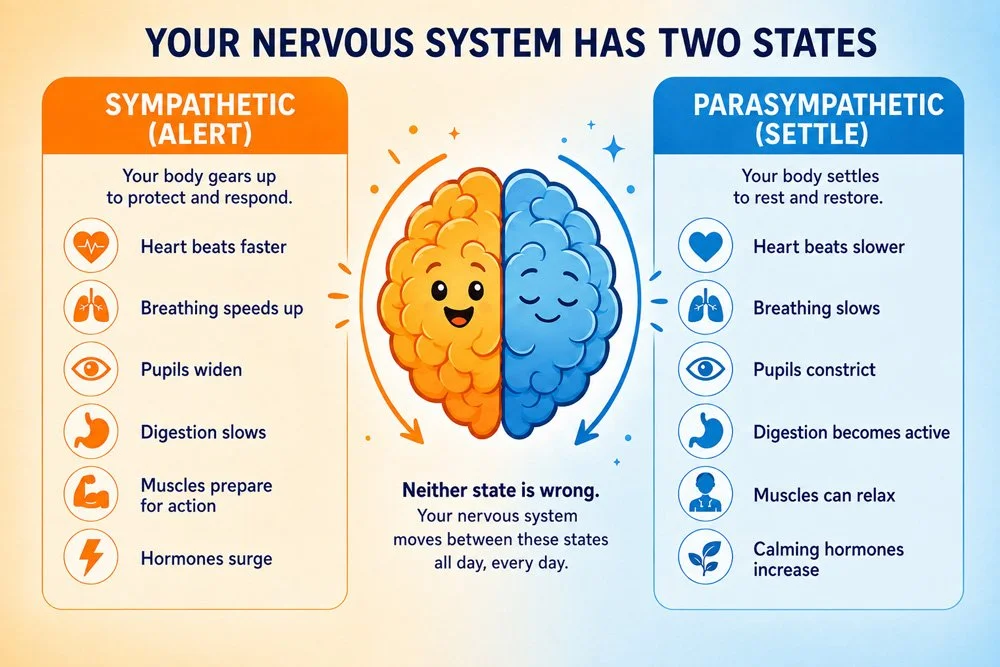
When your sympathetic nervous system becomes more active, your body prepares for action. Your heart beats faster, your breathing speeds up, your pupils widen and your muscles become ready to respond. This is often called the fight, flight or freeze response.
When your parasympathetic nervous system becomes more active, your body moves towards a more settled state. Your heart rate and breathing can slow, digestion becomes more active and some of that muscle readiness can ease.
Neither system is good or bad. We need both. The important thing is that your nervous system is designed to move between them.
For your neck, this matters because increased alertness can also increase muscle activity. Your neck and shoulders are often one of the first places people notice it.
Think about sitting at the computer trying to finish something quickly. You may start with relaxed shoulders, then ten minutes later find them creeping towards your ears.
What to do this week
This week's neck B.A.S.S. gives you a chance to notice that connection.
Rather than only thinking about where your neck is positioned, notice what else is happening. How are you breathing? Are you gripping? Can you keep moving while letting unnecessary tension settle?
A slower exhale can be a useful way of giving your nervous system a different input. So can familiar neck and shoulder movements done without rushing.
Practise this week's B.A.S.S. regularly, not only when your neck is already tight. A few small resets through the day are often more useful than one big effort at the end.
This week's reminder:
Long exhale. Soft neck.
Watch Anna-Louise's video below to put this week's Brain B.A.S.S. challenge into practice.

Book For Next Term
Next term is open for booking. Join us to build strength, move with confidence, and keep doing what matters most.
Click to book your spot now.